The universal charm of papier-mâché
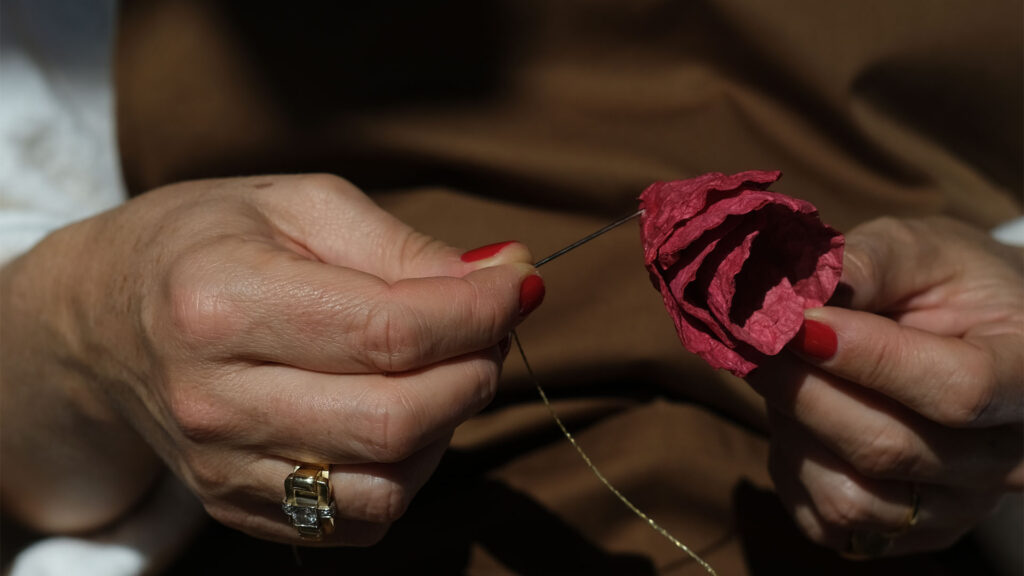
I walk into my studio and let my creativity run wild. The air smells of paper, slightly warm glue, and a thin thread floating between my hands. My fingers glide gently over the shapes that appear, and every fold, every layer of paper tells a story—not just mine, but that of those who, before me, folded, shaped, and brought this artisanal material to life. Papier-mâché still has that universal power: to transform the ordinary into the extraordinary, paper into emotion, craftsmanship into magic.
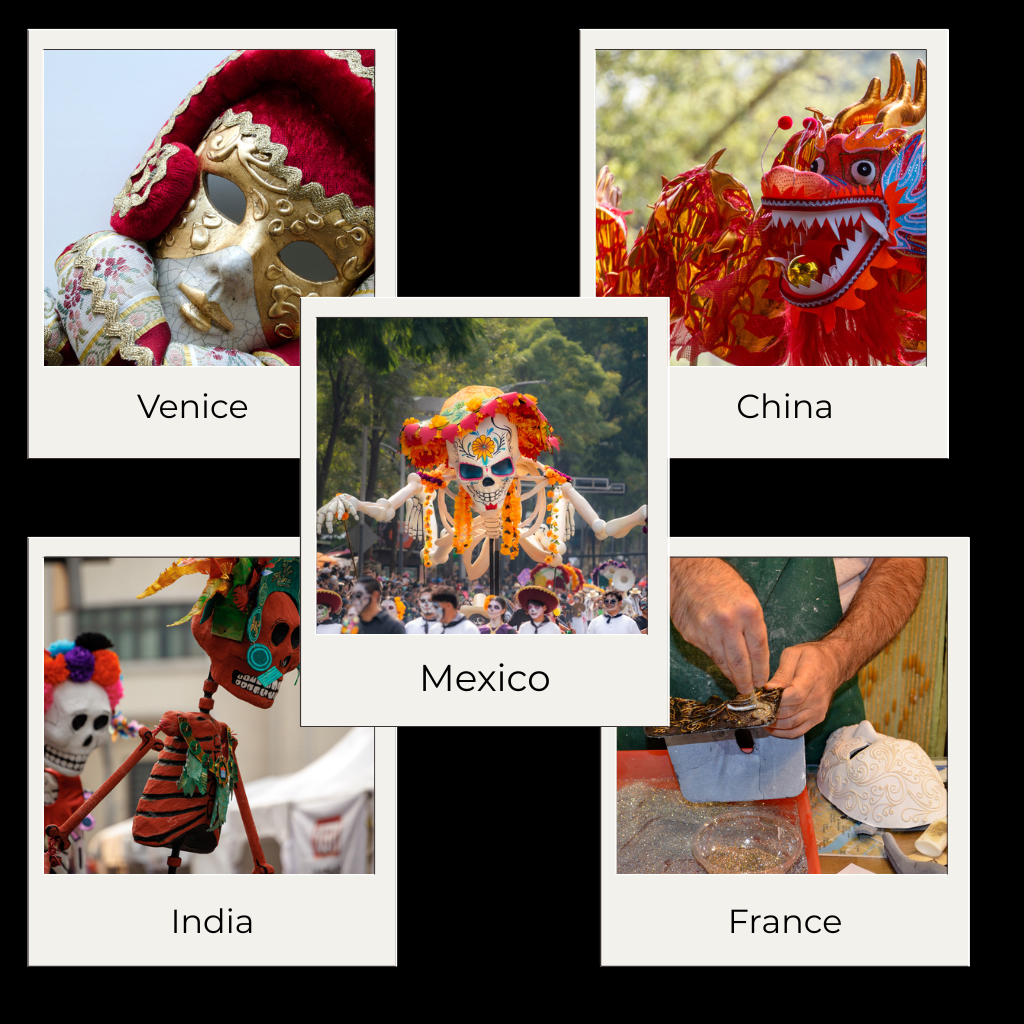
From Beijing to Venice, from Mexico City to Kashmir, papier-mâché travels across cultures and centuries. As we travel the world, we discover different traditions:
- In China, during festivals, paper dragons sway to the rhythm of drums and laughter, echoing ancient legends.
- In Mexico, Día de los Muertos lights up with smiling calaveras, small sculptures celebrating the memory and joy of the living and the dead.
- In India, in the temples of Kashmir, tiny paper deities wait silently for prayers, delicate as a breath.
- In France, and especially in Venice, papier-mâché enters the world of theater and carnival: decorative masks, symbols of devotion and celebration, emblems of the performing arts and popular culture.
Everywhere, paper takes shape, but changes character: sacred, festive, decorative, theatrical.
Lecce’s cartapesta and its unique technique
While in Venice and France papier-mâché flourished in the theatrical world through masks and temporary decorations, in Lecce it took on a completely different destiny. Between the 17th and 18th centuries, a tradition unique to Puglia and southern Italy emerged in the capital of Salento: the art of Lecce papier-mâché.
This uniqueness stems from a combination of different factors.
First of all, Lecce had a particularly fertile urban and religious environment: the proliferation of churches, convents, and monumentsrequired artistic decorations capable of embellishing sacred spaces without resorting to expensive materials such as marble. Local artisans then developed refined and innovative techniques capable of giving paper a flexible and resistant consistency, transforming it into a durable and malleable material capable of imitating stone or wood. Finally, Lecce papier-mâché was not only decorative: it became an integral part of popular devotion, carefully crafted to accompany processions, religious festivals, and celebrations, becoming an expression of a unique artistic and cultural identity in the Puglia region.
Barbers were the first to take up this craft, as they already possessed refined manual skills and had access to large quantities of recycled paper, which could easily be transformed into raw material. Their work did not take up all their time, so they were able to devote themselves to this new art during their free hours, considering it a creative and complementary activity. Their workshops were often small, and papier-mâché proved to be ideal: a lightweight, economical material that was easy to store and work with, requiring neither large spaces nor cumbersome tools. Barbers were central figures in their neighborhoods and, thanks to this role, helped to spread the first papier-mâché works, especially during religious and popular festivals.
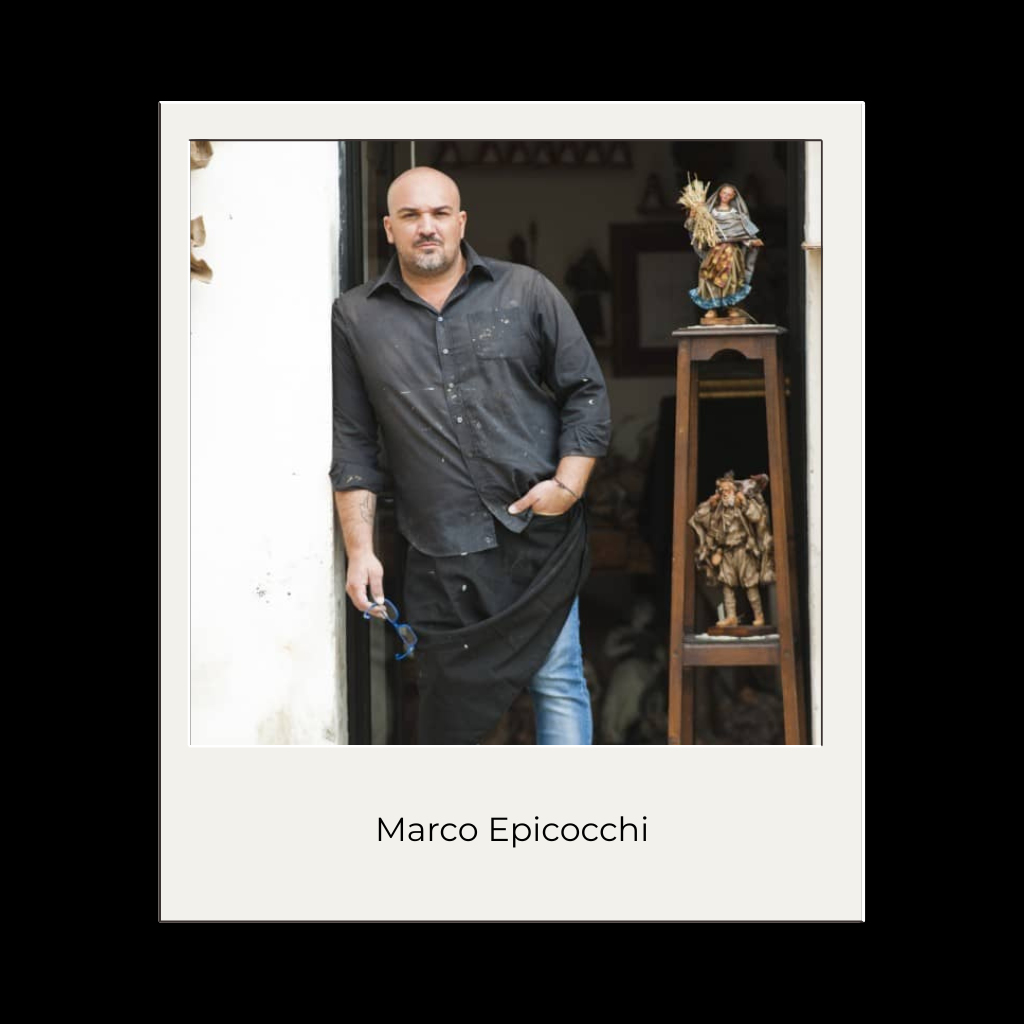
Here is an excerpt from an interview with Marco Epicocchi, one of the master papier-mâché artisans (born in 1974), who helps us understand the path taken by this tradition and its future:
Q : Master, in your opinion, does today’s papier-mâché production keep pace with modernity while preserving its uniqueness, or will it have to adapt materials and techniques in order to survive?
M.E. : Indeed, we use materials that differ from traditional ones, combined with those of the past—it’s a way of experimenting—but papier-mâché cannot be replaced for its specific working qualities. In my personal experience, the materials are preserved, although I admit that we keep an eye on the past while looking to the future. In my work, the old canons of papier-mâché meet contemporary art, especially in the drapery and sculpture of faces. It is a workshop craft, but there is no continuity with the new generations of artisans who could succeed the current masters.
Q : What steps should be taken to ensure that this tradition is passed on and not lost?
M.E. : It would be important to start with schools, particularly vocational schools, to train new generations who would choose this craft, which must also be a passion. It is true that there are amateur courses, such as at the former Società Operaia, Scuola Maccagnani, but they lack a professional character. The best way to pass on this art would be through apprenticeships, but while in the past there were large workshops that trained and then employed artisans, today it is difficult to retain apprentices, often due to legal restrictions. Perhaps if local institutions created specific programs and funding (not just on paper), this could be a starting point.
It is said that a statue is born either from nothingness or as an expression of an idea. First, a mass of straw bound with string is shaped to create the rough framework of a wire frame.
Today: hands, feet, and heads are shaped from clay by papier-mâché artisans, who are experts in sculpture and molding according to specific iconographies. The figure is then covered with layers of paper glued with a flour paste, to which a pinch of copper sulfate is added to repel parasites. The old masters used alum with flour paste to prevent mold. This adhesive is called ponnula.
Air or sun drying completes the first phase. Of course, there are “trade secrets” that artisans rarely reveal.
The old masters say that fuocheggiatura is the secret to papier-mâché: using heated spoons to fix the folds and movements altered by drying.
Next comes the coating, using “Bologna plaster,” which is slightly porous and absorbent, making it an excellent base for colors and gilding.
Finally: stuccoing, sanding, coloring, and decorating the details. Oil paints are used, although some craftsmen prepare their own pigments (“earths” such as amber, sienna, cinnabar) according to ancient techniques known only to practitioners.
How LADY PAPAVERO is reinventing papier-mâché jewelry
Papaveroshop draws inspiration from this magic.
Transforming papier-mâché into jewelry is not simply a matter of reducing its scale.
Traditional techniques often result in handmade jewelry made of paper or similar materials that are rigid, heavy, and impractical, as they are made with cardboard or rudimentary glues, such as flour paste. We, on the other hand, use a “secret formula” that makes each creation resistant and surprisingly light. To this we add mulberry fibers, paper, and natural substances, blended into a soft and malleable paste, perfect for giving shape to our ideas.
We use a truly exclusive technique: the sheets are torn, kneaded with glue, and left to macerate. The paste is then shaped by hand, portion by portion, until the desired shape is achieved. Once dried in ventilated spaces, the piece comes to life, ready for a careful finish and decoration—becoming an object that conveys beauty and memory.
Each piece is made with the same philosophy that guides the masters of Lecce: lightness, elegance, durability. But it is contemporary. It can be paired with a modern outfit, an evening gown, or an everyday look. It is not a static ornament: it is a travel companion, easy to carry, ready to accompany you in every moment of life.
A journey that leads to her jewelry
When I look at my finished pieces, I never consider them static objects. I imagine them as portable stories: fragments of paper bearing the light weight of an ancient tradition, now breathing new life. That’s what makes papier-mâché so special: fragile yet strong, capable of renewal without losing its memory.
That’s why each LADY PAPAVERO piece is never just an accessory: it’s a living legacy, an intimate way to carry a piece of history transformed into something contemporary. If you love authenticity, things that surprise and move you because they start small and grow big, I invite you to discover these creations. Perhaps you will find your own story in their delicate folds.
Don’t hesitate to go and discover them the papier-mâché museum at the Charles V Castle in Lecce.